Parasense has worked extensively on development of:
- Advanced novel innovative, responsive, adaptive and gestures interactive interfaces for public art installations, with major attention paid to accessibility and democratic values, as well as not taking WWW media, use of software or hardware tools for granted.
- AI enhanced kiosks utilizing latest advancements of W3D window managament, HTML5, javascript, and machine learning such as google´s mediapipe AI code which enables the use of regular inexpensive webcams as gestural and embodied input devices.
- Sensor fusion utilizing all options made possible by microcontrollers such as Raspberry Pi, Arduino, Teensy, Beaglebone/Bela.IO, as well as modern sensor technologies, including environmental sensors, beam and 360 laser lidars, 3D depth cams and mems sensors.
Key examples of solutions I have created at Parasense:
1) KUTU/SPAWN video sync software:
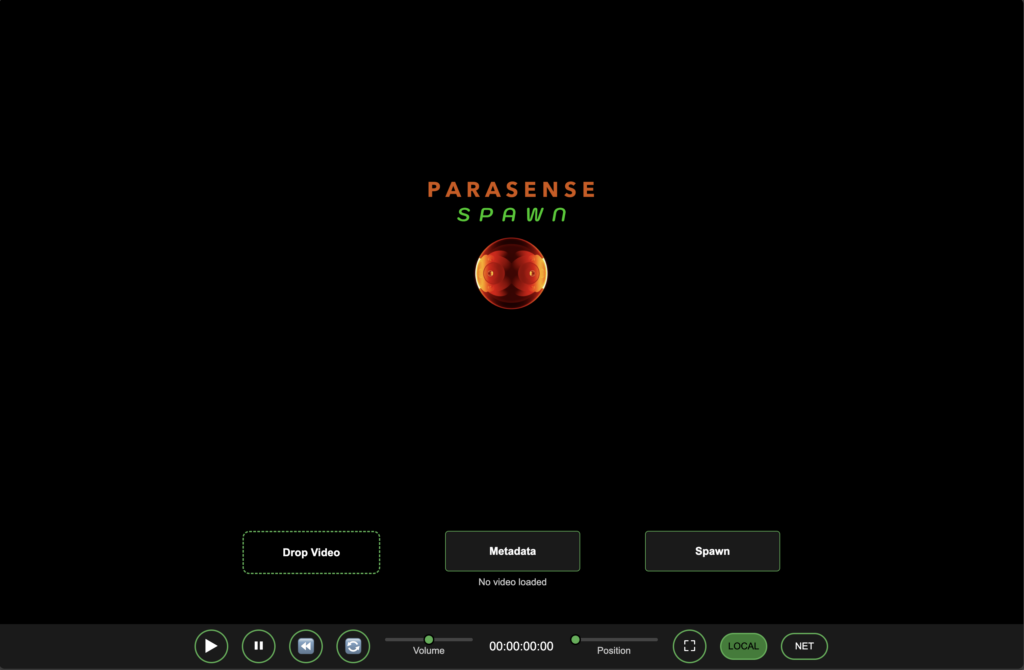
An advanced adaptive modular video synchronization tools for museums, galleries, and media artists worldwide, cleverly utilizing contemporary Mac Silicon computers, such as Mini M1-M4 models, Windows NUC PC infrastructure and Raspberry Pi 5s for nimble, agile and intuitive video synchronization.
This approach removes the need for expensive media servers and unnecessary renting and stacking multiple expensive media players.
A single Mac Mini M4 or Mac Mini M4 Pro can provide three (3) individual 4K UHD 60hz video outputs with either SDR or HDR and a single Mac Studio M3 Ultra or higher can provide upto five to seven (5-7= individual 4K UHD 60hz video outputs, with proper adapters.
The related moderately priced KUTU / SPAWN software with A) single machine versions as well as B) networked expanded versions will be released as a safe notarized and signed Apple .dmg/app during 2026, with an upcoming link on this page to digital sales.
Meanwhile, feel free to contact me, with possible early betatesting interest.
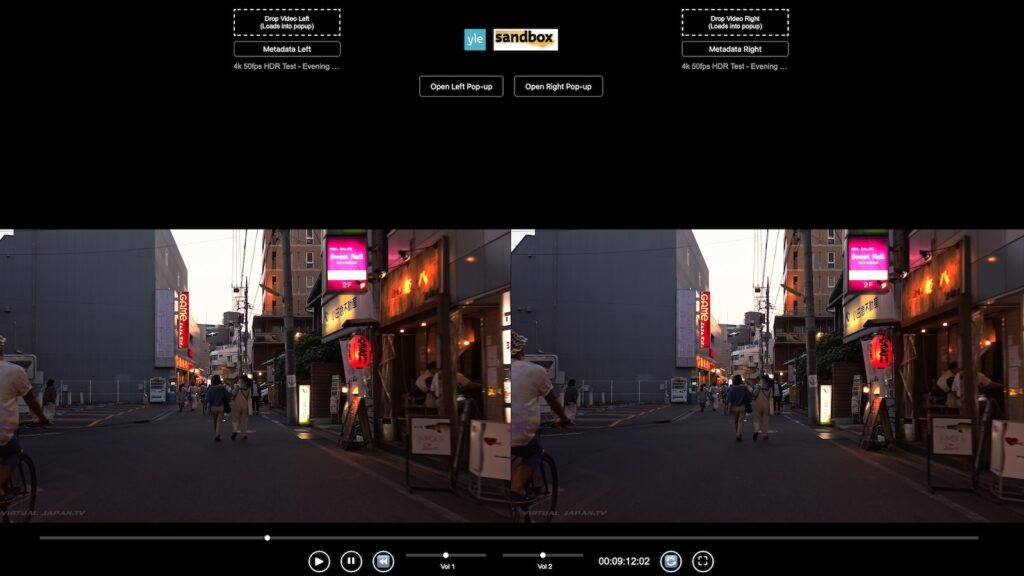
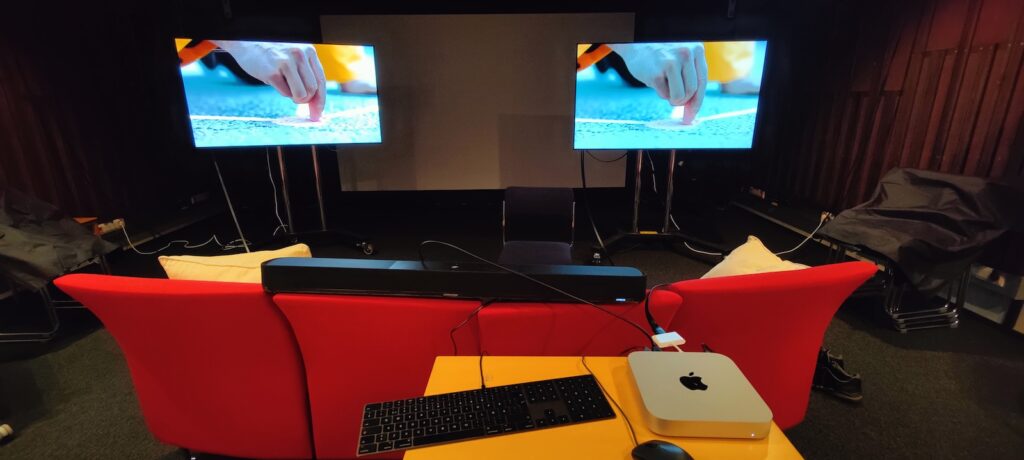
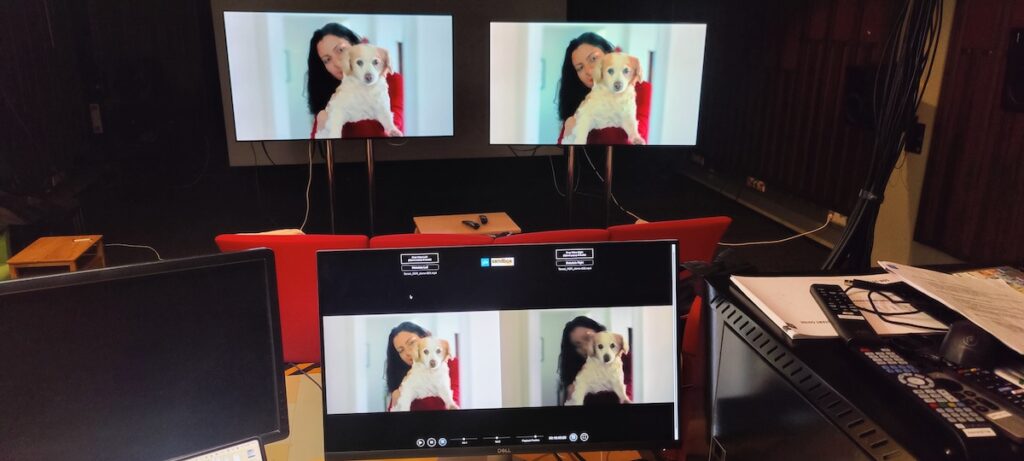
2) A modular video synchronization software for finnish Broadcast Company YLE´s “Sandbox” test theater:
The project provided a tool for YLE to choose near future IP broadcast standards for Finland (HD, 4K UHD, SDR, HDR variants):
3) Historical image interface for Museo Leikki / Museum of Play in Espoo, Finland:
First prototype below uses only a 2D camera as a 3D camera with Mediapipe AI code, tracking the users´bodies and heads in 3D for touchless interaction. The final version below uses a traditional touch screen interaction.
All code is responsive, adaptive and context aware, and runs on contemporary WWW browsers, with AI assisted elements running in the browser tab.
- 3D Bodytracking version using a 1080p webcam on a Macbook Pro M1 Max.
- Final version using touch gestures
4) Living History / Elävä Historia kiosk for Museum of Technology / Tekniikan Museo in Helsinki, Finland.
ROLE: Concept design, AV prompt coding, user testing of a standalone HTML5/Javascript/Mediapipe AI enhanced browser based installation. Together with Äänitoimisto´s Antti Soulanto and Jani Hietanen.
In Living History / Elävä Historia kiosk, the installation allows:
- the museumgoers to take photos and intelligently composites the resulting portraits into various historical images
- Sharing of the resulting images in social media
- Automated sending of daily anonymous user engagement data and related reports, as a clearly laid out PDF, complying wit the EU GRPR privacy guidelines (no user data, images or identity related data stored)

5) A realtime 3D Fractal stereoscopic visualization tool.
A WWW browser based WebGL/WebGPU code solution enabling realtime creation and manipulation of extremely complex immersive synthetic 3D worlds.
Running on a Macbook Pro M1 Max on the below video. FPS will be way higher on later generation Mac Studio M5 Ultra machines.
6) Realtime touch controlled “Optical Flow” interface:
A fluid customizable painting interface running on a commonly used Brightsign HD1022 mediaplayer
7) An advanced embodied touchless interface for public space kiosks in museums or shopping centers
- Based on optical tracking of a “magic finger” or a face/body centroid with an inexpensive 2D camera, read as a relative 3D camera utilizing AI/machine learning within a modern WWW browser
- An ideal touchless tracking interaction method for kiosks during the time of pandemics
- Works with kiosks of any kind. Can control any media, images, video, even painting from distance
- Feel free to contact for further inquiries and collaborations (via about page).